Silent Shredders: How North Texas Spring Hail Gradually Ruins Your Asphalt Shingles
Silent Shredders: How North Texas Spring Hail Gradually Ruins Your Asphalt Shingles
Across Burleson and South Fort Worth, the first spring supercell does not always rip roofs open. It bruises them. The bruises are hard to see from the street along Wilshire Boulevard or Old Town Renfro Street. But they start a quiet chain reaction that strips protective granules, hardens the asphalt, and turns a watertight roof into a leak source over the next few storm cycles. For property owners looking for Hail Damage Roof Repair Burleson TX, the risk is not the storm you just saw. It is the three that follow.
This article speaks to commercial and multifamily owners who manage shingle slopes over leasing offices, amenity buildings, and garden-style buildings, and who also operate low-slope sections over clubhouses, corridors, and retail tenant bays. It addresses school district buildings, churches, hotels, and senior living communities that carry large asphalt shingle footprints beside low-slope TPO, PVC, or EPDM roofing. It is tuned to what hail in the DFW hail belt actually does to roofs from Burleson to McKinney, how insurers judge that damage, and what a compliant, defensible restoration looks like in 2026.
What spring hail actually does to an asphalt shingle roof
Hail strikes drive granules off the shingle surface. Granules are the UV shield. When hail displaces them, the asphalt binder beneath heats faster in our summer sun and embrittles. On roofs along I-35W, US 287, and Texas 174, the south and southwest slopes take the worst of it because the sun angle accelerates aging after a storm. The shingle mat then flexes with each thermal cycle until fine cracks open around the hail bruise. These cracks allow capillary water movement. The leak shows up later at sheetrock seams, light fixtures, or HVAC chases. Many owners call for Hail Damage Roof Repair Burleson TX only after seeing interior staining. By then, hidden damage is already widespread.
On Class 4 impact rated shingles the story improves, but it does not always end. A clean 2-inch stone can still dislodge granules without a visible crater. On older three-tab systems across 76028 and 76097, even 1-inch hail can bruise the mat and weaken the adhesive strip. That strip is what stops wind from lifting tabs. Hail plus a 45 mph outflow along the US 287 corridor is why entire slopes sometimes look scalloped a week after the storm.
What hail looks like on the roof and why the photos matter
Hail marks resemble dull scuffs with a ring, not shiny cut edges. They might feel soft underfoot right after the storm. Thirty days later the spot cures and turns brittle. Gutters carry the proof. After a Burleson event, downspouts at retail centers near Alsbury Boulevard often flush a surprising volume of black sand. That is UV-shield granule loss at scale. The photos that win insurance arguments focus on three things: pattern, displacement, and fracture. Pattern shows directional spread and density per 100 square feet. Displacement shows granule loss with the substrate exposed. Fracture shows mat break. A proper Hail Damage Roof Repair Burleson TX file puts all three elements in-frame, time-stamped, and geotagged.
On low-slope membranes that tie in at parapet walls or roof-to-wall transitions behind signs, hail leaves different fingerprints. TPO and PVC can dimple without breaking fabric, but fabric-reinforced fields will telegraph cracks at stress points around fasteners over time. EPDM roofing can absorb impact better in the field but remains vulnerable around aged seam tape and angle changes at curbs. A post-storm commercial inspection should always include those transitions, pitch pockets, and HVAC curbs. That is where slow leaks begin.
Local reality check: the DFW hail belt and Burleson’s 2024–2025 track
North Texas averages 8 to 12 hail events per year with stones 1 inch or larger. Tarrant, Dallas, Collin, and Kaufman Counties sit in one of the most active hail zones in the country. The 2024 and 2025 spring seasons produced multiple large events that pushed one of the highest commercial roofing claim volumes DFW has recorded. Burleson, Crowley, Everman, and southwest Fort Worth absorbed back-to-back cells that crossed US 287 and I-35W, with reports of 1.5 to 2-inch stones in pockets. Those numbers matter because they set the inspection lens. If an inspector says no damage without slope-by-slope density mapping, they skipped a step.
One shareable data point from SCR’s inspection portfolio should reframe how owners prioritize maintenance: on TPO roofs older than 12 years across the DFW metroplex, about 60 percent show measurable seam or surface degradation along the south-facing slope due to UV and heat cycling, a rate that doubles the observed degradation on north slopes of the same roofs. That exposure pattern accelerates post-hail failures for single-ply systems tied to shingle slopes on mixed-slope buildings.
Why small hail today becomes a big leak this fall
Texas heat speeds every chemical reaction on the roof. Hail removes granules. Sunlight then hardens the exposed asphalt. The next microburst along I-820 or I-20 drives wind that lifts loosened tabs. Rain then finds a path under the course above. If a Burleson property manager near Hidden Creek Parkway ignores spring hail, September storms often expose the oversight with ceiling stains over reception desks and tenant suites. Hail is a process. The leak is the result.
How adjusters read hail on shingles and low-slope roofs
Insurers distinguish cosmetic damage from functional damage. Cosmetic scuffs on metal do not pay. Functional mat fracture on shingles does. On TPO, PVC, and EPDM roofing, cosmetic dimples can be dismissed, but punctures, cracked laps, and seam splits are functional. EPDM roofing Modified bitumen cap sheets with granule loss and fractured plies are functional. Built-up roofs with alligatoring that worsened after hail can move into replacement territory if moisture surveys confirm saturation under wide areas. For Hail Damage Roof Repair Burleson TX claims, the most persuasive files prove functional damage across test squares, document slope-by-slope density, and show hidden moisture with infrared scanning where roof geometry suggests water traps.
The post-storm assessment discipline that holds up in Burleson
A solid protocol in Tarrant County starts with site control and hazard review, then slope-by-slope shingle test squares, membrane sample areas at roof drains and curbs, and component-level checks at penetrations. On mixed-slope assets, crews should check the shingle-to-membrane tie-in detail, step flashings, counterflashing, and coping. Infrared moisture surveys at dusk are invaluable for low-slope fields to identify saturated insulation under an intact surface. Core sampling at flagged locations confirms moisture depth and material condition. Drain and scupper checks remove post-storm clogging before the next rainfall. Photographic evidence includes scale references, compass headings, and material tags.
Documentation matters. A claim file that can withstand an engineer review will map hail density, distinguish unrelated age wear, and anchor every supplement request to code or manufacturer instruction. Xactimate scope review must tie each line item to a code citation or material requirement, not to a vague standard. HB3 compliance in Texas requires transparency on deductibles and prohibits rebate promises. Files that ignore HB3 compliance draw scrutiny that slows restoration.
What gets approved and why on Hail Damage Roof Repair Burleson TX claims
Adjusters approve slopes and sections, not feelings. If the north slope shows five hits in a test square and the south slope shows twelve with mat fracture, expect the south slope to pay quickly and the north to sit in the gray zone unless collateral damage and pattern density close the gap. On low-slope areas, seam failures around pipe boots and curb flashings will pay when documented with peel-back photos that show fabric fracture or adhesive failure tied to hail shock. Parapet wall coping with wind damage and open laps often supplements after the main estimate if the first inspector missed it.
Typical commercial roof claims in DFW range from $50,000 to $2,000,000 depending on building size, roof type, and interior damage. Apartments with mixed shingle and low-slope can sit in the middle of that band. Hotels with large shingle fields along I-35W often trend higher because of slope count and elevation changes. Warehouse and retail centers at the US 287 interchange often see larger line items for tapered insulation, cover boards, and edge metal on single-ply replacements.
Why shingle slopes on commercial and multifamily sites require a different plan
Many Burleson communities run asphalt shingles on pitched buildings and TPO or modified bitumen on connecting breezeways and common buildings. A hail event that looks minor on shingles can still split aged TPO laps at mechanical fastener rows. PVC with plasticizer migration near end-of-life can crack at welds months after hail. EPDM roofing can hide post-hail stresses under ballast or at membrane transitions where old pressure-sensitive seam tape lets go. That is why Hail Damage Roof Repair Burleson TX plans that focus only on shingles usually miss emerging leaks in adjacent flat sections.
On mixed-slope buildings, owners should treat the property as a system. If shingles are being replaced, evaluate step flashing and counterflashing that tie into the low-slope membrane. Consider a cover board such as a gypsum or HD polyiso layer over existing insulation during single-ply replacement to increase hail resistance. For shingle slopes, consider Class 4 impact rated systems from manufacturers with proven DFW performance. On low-slope fields, review membrane thickness and reinforcement. Options like reinforced TPO at 80-mil, KEE-PVC for chemical resistance, or EPDM at 60-mil or 90-mil in fully adhered assemblies provide stronger impact performance when combined with cover board and proper insulation attachment.
Material choices that change the hail math
Class 4 shingles tested under UL 2218 have better impact resistance than legacy three-tab. The upgrade can reduce future claim frequency and may qualify for insurance premium credits. But impact ratings do not remove the need for slope design, proper ventilation, and secure edge metal. On low-slope roofs, the right combination is not only the membrane type, but the assembly. A fully adhered single-ply on a rigid cover board distributes impact better than a loose substrate. Tapered polyiso insulation that drains water to internal drains or through-wall scuppers reduces standing water, which in turn lowers long-term heat loading. Polyiso delivers R-5.7 to R-6.5 per inch, which supports energy performance in climate zone 3A.
Brand ecosystems matter in DFW because warranty support must be real. GAF offers EverGuard TPO and Diamond Pledge warranties. Carlisle provides Sure-Weld TPO, Sure-Seal EPDM, Sure-Flex PVC, and Total Roofing System Warranty options, including No Dollar Limit coverage. Firestone’s UltraPly TPO and RubberGard EPDM pair with Red Shield warranties. Johns Manville, Versico, Sika Sarnafil, and Mule-Hide round out systems SCR installs across the metroplex. A 25 to 30-year NDL warranty on a properly designed system can align with a building’s mortgage cycle and reduce total cost of ownership, even when hail adds intermittent repair work.
Inspection tools that catch the slow leaks before they spread
Infrared moisture surveys detect wet insulation under a roof that looks fine to the eye. Water changes the way a roof releases heat after sunset. Thermal imaging highlights those pockets. Core sampling confirms the layers, checks for trapped moisture, and tells you if the substrate has softened. On shingles, the test squares plus attic or deck checks around penetrations give a complete view. Drains and scuppers always make the inspection checklist. A clogged drain near a hail-bruised membrane is how a minor event evolves into under-deck saturation and serious repairs.
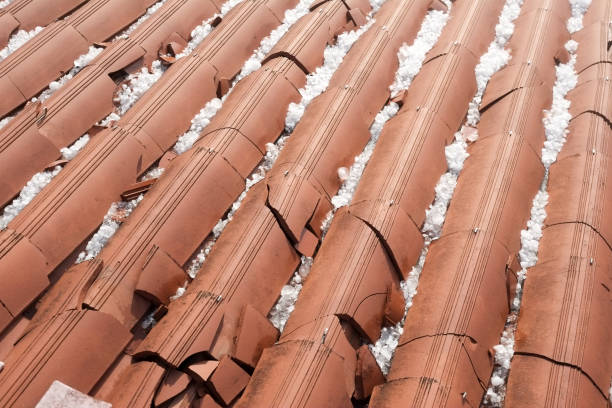
Five field signals that hail has compromised a shingle roof
- Consistent hail marks at a density of 8 to 12 hits per 100 square feet across multiple slopes.
- Granule sediment in gutters and downspouts that outnumbers normal seasonal wash.
- Fractured mats seen under lifted granule areas when probed gently at test squares.
- Dislodged ridge caps or lifted shingle tabs after a wind event that followed hail.
- Interior moisture at light penetrations or party walls after moderate rainfall.
If two or more of these show up on buildings along Alsbury Boulevard, Hidden Creek Parkway, or the US 287 frontage, schedule a Hail Damage Roof Repair Burleson TX assessment before the next storm cycle.
Low-slope red flags after hail on TPO, PVC, and EPDM roofing
TPO can show circular dimples that later propagate into cracks at fastener rows or where the membrane spans over rough substrates. PVC that has lost plasticizers near end-of-life may split along welds during summer expansion cycles. EPDM roofing holds up well in the field, but edge metal, pipe boots, and aged tape seams break down after impact and heat. Modified bitumen cap sheets with granules knocked off in patches will age faster and can open up along ridged areas. Built-up roofing with existing alligatoring can lose surfacing and let ultraviolet light accelerate ply fatigue. A disciplined inspection must probe those exact locations, not just the open field.
Claim structure, timing, and why documentation wins
Texas policies set timelines. File notice of loss quickly. Aim to have the initial inspection within 30 days of the event. Gather collateral damage photos from roof-mounted HVAC units, soft metals, and fences to validate hail size and direction. Schedule adjuster meetings onsite with someone who knows the assembly and code. For Hail Damage Roof Repair Burleson TX, present slope-by-slope or section-by-section maps with counts from test squares, photos of mat fracture, and any infrared flags. Xactimate line items should note code citations for ice and water shields at eaves where required by local code or manufacturer, proper underlayment, drip edge, and ventilation adjustments to balance intake and exhaust on large shingle fields.
Supplements are normal. They exist to correct scope omissions or add code-required components. Depreciation math matters. Actual Cash Value payments arrive first. Recoverable depreciation releases after completion and invoice. Keep the file organized so funds move without delay. HB3 compliance is non-negotiable. Deductibles cannot be waived, and storm restoration advertising must be clear.
Material and assembly upgrades that reduce the next claim
For shingle slopes, consider stepping up to a Class 4 system with high-reflectance granules on south slopes to lower thermal load. Specify proper starter strips, hip and ridge caps, and continuous drip edge. Transition flashings into adjacent low-slope membranes should be reset, not reused. For low-slope, increase membrane thickness or reinforcement, add a rigid cover board, and use fully adhered assemblies where appropriate to spread impact. Reinforced 80-mil TPO, KEE-PVC, or thicker EPDM roofing can deliver better hail resistance when combined with correct fastener patterns and edge metal that meets Factory Mutual and UL 580 uplift standards. On roofs with chronic ponding, consider silicone coating over reinforced seams after repairs, or evaluate SPF foam plus coating for sectional upgrades where drainage can be re-profiled at $5 to $9 per square foot in DFW.
What SCR documents after a storm and how the file gets built
- Property map, slope layout, and section IDs tied to compass headings and zip code location such as 76028 or 76097.
- Test-square counts for shingles and density maps for single-ply or modified bitumen fields.
- Infrared moisture survey images tagged to roof plans, core sample photos, and moisture meter readings.
- Component close-ups at drains, scuppers, parapet coping, pipe boots, curb flashings, and skylight perimeters.
- Xactimate scope with code notes, manufacturer detail citations, and an HB3 compliance statement.
This documentation standard holds up whether the property sits near Burleson Commons, along NE Renfro industrial corridors, or on the US 287 interchange. It also scales to Fort Worth 76102, Arlington 76011, Dallas 75201, Plano 75024, Frisco 75033, McKinney 75070, Mesquite 75150, Rockwall 75032, Forney 75126, and Terrell 75160 where SCR’s dispatch originates.
Why location and access matter for emergency triage
Spring cells move fast from the southwest up I-35W. Dispatch speed determines whether a torn ridge cap becomes a water path into multiple units. SCR’s 24/7 operations use cross-DFW routes along I-635, I-30, I-20, I-820, and US 80 to reach Burleson quickly for tarping and temporary dry-in. Hail Damage Roof Repair Burleson TX often starts with same-day stabilization. That buys time to perform a methodical assessment instead of stacking guesswork on top of emergency work orders.
Integrating shingle, metal, and low-slope scopes on mixed-slope campuses
Many Burleson and South Fort Worth campuses include shingle-clad buildings, covered breezeways, and low-slope admin or commons buildings. The right plan coordinates tear-off sequencing so penetrations and tie-ins get rebuilt in the right order. Edge metal must be matched to manufacturer-approved details so long-term NDL warranties remain valid. Where standing-seam metal or R-panel roofs intersect with shingle slopes, transition flashings require special attention because hail and wind drive water sideways into those seams. A smooth Hail Damage Roof Repair Burleson TX project template assigns day-by-day scopes to trades and limits exposure windows with dry-in plans at the end of each workday.
Shingle choices that perform on Burleson properties
Architectural shingles with thicker mats and Class 4 ratings reduce hail vulnerability. Some systems pair with SBS-modified sealant strips that hold better after repeated heat cycles on south slopes facing I-35W. Pay attention to ridge cap selection. Hips and ridges take the brunt of hail and wind across open parking fields like those near the US 287 and SH 174 corridors. Starter course integrity and continuous drip edge along eaves and rakes keep wind-driven rain from sneaking behind the fascia after future storms.
Low-slope systems that hold up in the DFW hail belt
Performance comes from assembly design, not just membrane brand. A reinforced TPO or PVC over a gypsum or HD polyiso cover board with fully adhered attachment spreads impact and resists flutter. EPDM roofing at 60-mil or 90-mil in fully adhered assemblies remains a strong option for complex geometries and retrofit overlays where code permits. Modified bitumen two-ply EPDM roofing contractors or three-ply systems with granule-surfaced cap sheets perform well against scuffing and foot traffic, but hail resilience improves when plies are tight and substrate is rigid. Edge metal with Kynar 500 or PVDF coating and correct cleat details prevents wind-lift that often follows hail seasons. Energy targets also matter. High SRI ratings can reduce heat load on large fields, cutting expansion stress after hail seasons weaken surface layers.
Why manufacturer certifications matter during storm restoration
Insurers rely on verifiable standards. Systems from GAF, Carlisle, Firestone, Johns Manville, Versico, Sika Sarnafil, and Mule-Hide come with published details and warranty pathways. Authorized applicator status ensures the right adhesives, fasteners, and accessories are used and that field welds or seams meet the spec. On Hail Damage Roof Repair Burleson TX projects, that status also helps when a manufacturer’s field tech inspects and supports a claim or installation. It eliminates the gap between what the paper says and what the crew installed.
The value of a whole-roof moisture map before committing dollars
Replacing only what got wet sounds smart until trapped moisture in adjacent insulation spreads under summer heat and fall rains. An infrared moisture survey creates a map of saturation. Owners can then choose targeted replacement, partial section replacement at $4 to $12 per square foot for smaller low-slope areas, or full-system change-outs for broad saturation. Multifamily owners near Hidden Creek face this choice often because shingle slopes and low-slope corridors age at different rates. A moisture map makes the investment decision defensible, both for the board and the insurer.
Burleson, Fort Worth, and beyond: property types feeling the hail squeeze
Legacy retail centers from the 1970s to 1990s along Wilshire Boulevard often carry modified bitumen or BUR that saw the worst of the 2024–2025 events. Shingle-clad outparcels, restaurant roofs, and bank buildings show predictable bruising patterns on southwest slopes. Industrial buildings near NE Renfro and the US 287 corridor carry large-format TPO that often survives the first year after hail but develops seam issues next summer if reinforcement or cover board was thin. HOAs managing garden-style apartments in 76028 and 76097 carry both shingles and low-slope tie-ins. Hotels and assisted living facilities along I-35W carry big shingle counts with mechanical loads that complicate flashing. The pressure is across asset classes, not just one sector.
Why the roof edge decides whether a storm becomes a claim next year
Hail weakens surfaces, but wind lifts edges. Many Burleson claims one year after hail stem from edge metal that was under-fastened or incompatible with the membrane. On shingle slopes, drip edge that stops short of the fascia exposes wood. On single-ply fields, cleated edge metal with proper fastener spacing tied to a manufacturer detail prevents peel-back during outflows along Tom Landry Freeway or the President George Bush Turnpike corridors when squall lines sweep across the metro. Invest at the edge or plan for repeat claims.
EPDM roofing in the hail conversation
EPDM roofing earns a place in DFW because of its flexibility and puncture resistance in the field. In Burleson, fully adhered EPDM at 60-mil or 90-mil over a high-density cover board often rides out hail better than thinner single-ply alternatives. The caution is at seams and penetrations. Aged pressure-sensitive tape, old pipe boots, and field-fabricated corners fail faster after hail and heat cycles. That is why EPDM projects in Hail Damage Roof Repair Burleson TX plans must include a detailed review of all seam tapes, flashing kits, and curb details with replacements where materials have reached the end of their service window.
Scheduling around tenants, schools, and patient care
Retail and medical tenants along South Burleson Boulevard and Old Highway 81 need constant access. School facilities must phase work outside instruction hours. Hotels cannot shut wings without a plan. Sequencing for Hail Damage Roof Repair Burleson TX means planning day parts, staging fall protection and material lifts to avoid peak hours, and capping each day’s scope with a dry-in. Safety systems such as OSHA-compliant tie-off anchors and temporary guardrails allow controlled production without exposing tenants or crews. Skylight perimeters, smoke vents, and roof hatches get flagged and barricaded. A clean plan keeps operations moving even as restoration proceeds.
Why local presence and 24/7 coverage count
Storm chasers come and go on I-35W after every hail event. Local owners know who shows up a year later when a seam releases. SCR operates from Terrell at 107 Tejas Dr, 75160, with full DFW coverage. Crews run 24 hours, 7 days per week. That has practical value when a Friday 10 p.m. Outflow line puts water through a tenant ceiling on Renfro Street. Hail Damage Roof Repair Burleson TX starts with immediate stabilization and continues with methodical, well-documented restoration. That is how claims close cleanly and how roofs stay in service the next season.
A final word on the “silent shredders” and the next steps
Hail in North Texas breaks roofs two ways. It hits hard on day one and it sets up the failure that shows months later. Asphalt shingles suffer the quiet, cumulative form. Single-ply and modified systems show delayed failures at laps and edges. The fix is not panic. It is a disciplined assessment, honest scope, quality installation, and documentation that aligns with insurers and Texas law. That approach protects cash flow and the building.
Ready to act
For property owners who need Hail Damage Roof Repair Burleson TX now, SCR, Inc. General Contractors provides 24/7 emergency stabilization, free commercial roof inspections, and full HB3-compliant claim support with Xactimate-trained estimators. Crews service Burleson 76028 and 76097 via I-35W, US 287, and SH 174, and cover the broader DFW metroplex from Dallas 75201 to Fort Worth 76102, Arlington 76011, Plano 75024, Frisco 75033, McKinney 75070, Mesquite 75150, Rockwall 75032, Forney 75126, and Terrell 75160. Manufacturer-certified teams install GAF, Carlisle, Firestone, Johns Manville, Versico, Sika Sarnafil, and Mule-Hide systems across shingle, TPO, PVC, EPDM roofing, modified bitumen, and coatings. Call (972) 839-6834 for immediate dispatch, a free written assessment, and a clear plan for Hail Damage Roof Repair Burleson TX that stands up across the next storm season.
SCR, Inc.
General Contractors
Roofing • Restoration • Storm Repair